
As of December 26, 2025, Semrush has heavily invested in AI to address the shift toward AI-powered search engines like Google AI Overviews, ChatGPT, Perplexity, and Gemini. These features help marketers optimize for both traditional SEO and generative AI visibility (often called AEO or GEO).
Semrush’s AI tools are integrated across its platform, with standout offerings in the AI Visibility Toolkit, Semrush Copilot, content generation, and forecasting. Data is drawn from official Semrush updates and independent reviews for accuracy.
Here’s a typical Semrush dashboard showcasing AI-driven insights:
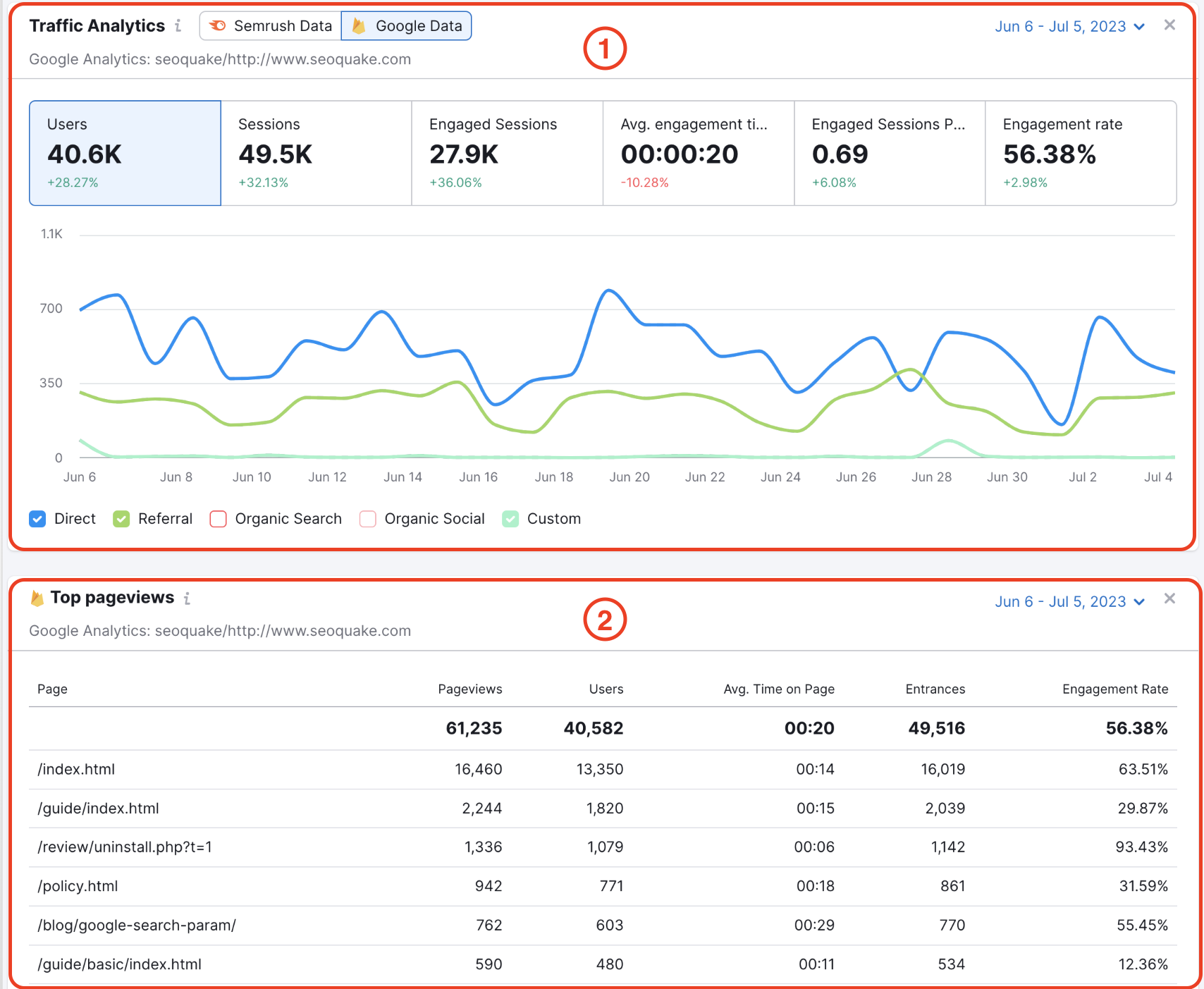
Image credit: Semrush Knowledge Base
Another view of the Semrush One interface, highlighting unified SEO and AI tools:
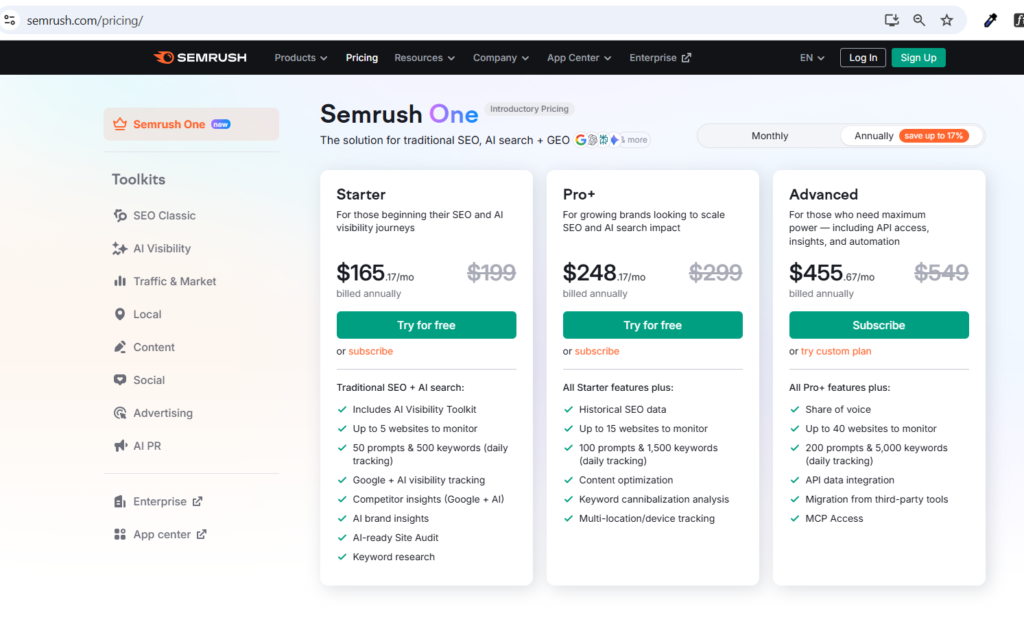
Key AI Features in Semrush (2026 Overview)
Semrush’s AI advancements focus on measuring brand presence in AI answers, automating recommendations, and creating/optimizing content. Many are part of Semrush One, the unified platform launched in 2025 combining traditional SEO with AI search intelligence.
| Feature | Description | Best For | Availability/Limits |
|---|---|---|---|
| Semrush Copilot | AI-powered personal assistant in your dashboard. Analyzes data from multiple tools (e.g., Site Audit, Position Tracking) to deliver prioritized recommendations, alerts, and quick wins. | Daily SEO management, quick insights | Included in all paid plans; improves with user feedback (like/dislike). |
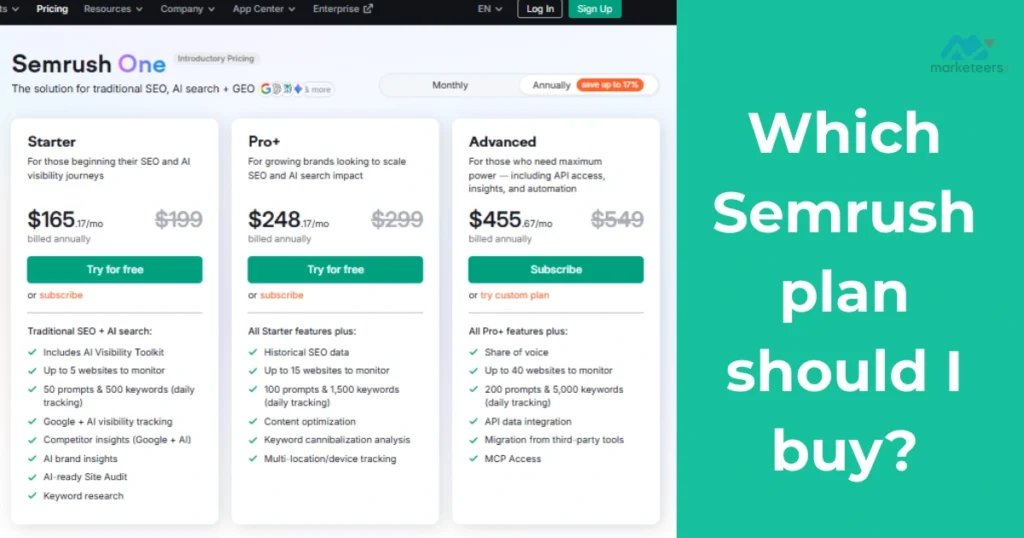
| AI Visibility Toolkit | Tracks brand mentions in AI platforms (ChatGPT, Perplexity, Gemini, Google AI Overviews). Includes Prompt Tracking, Brand Performance reports, AI Share of Voice, and competitor benchmarking. | Monitoring AI search presence, reputation management | Starter: Limited prompts/keywords; Higher in Pro+/Advanced. Add-ons available. |
| Content Toolkit (formerly ContentShake AI) | AI-driven content generation: Creates SEO-optimized articles, briefs, and drafts. Includes real-time optimization, idea generation, and social post creation. | Content marketers, bloggers scaling production | Integrated; Free AI text generator limited to 3/day without login. |
| AI Overview Analysis & Tracking | Monitors visibility in Google AI Overviews; tracks AI Mode in Position Tracking tool. Analyzes keywords likely to trigger AI summaries. | Optimizing for Google’s generative results | Available in Position Tracking; Beta features expanded in 2025. |
| AI Optimization & Forecasting | Enterprise-level: Models potential traffic/reach growth in AI search; automates prompt gap analysis and content optimization for LLMs. | Large brands forecasting AI impact | Primarily Enterprise; Includes ROI modeling. |
| AI PR Toolkit | Identifies media outlets trusted by LLMs; AI-assisted outreach and citation tracking. | PR teams building AI-friendly authority | Integrated with AI Visibility. |
| Other Integrations | AI-enhanced keyword research (topical authority scoring), ad creative analysis, GBP AI Agent for local profiles, and traffic data for AI channels. | Broad digital marketing | Varies by toolkit. |
Semrush‘s AI tools leverage one of the largest datasets: 27.5B+ keywords, 43T backlinks, and 90M+ AI prompts monitored daily. This gives reliable insights for US-based local campaigns and global multi-language strategies.
Example of Semrush’s AI content generation interface:

Image credit: Semrush Blog
A view of AI-powered recommendations in action:
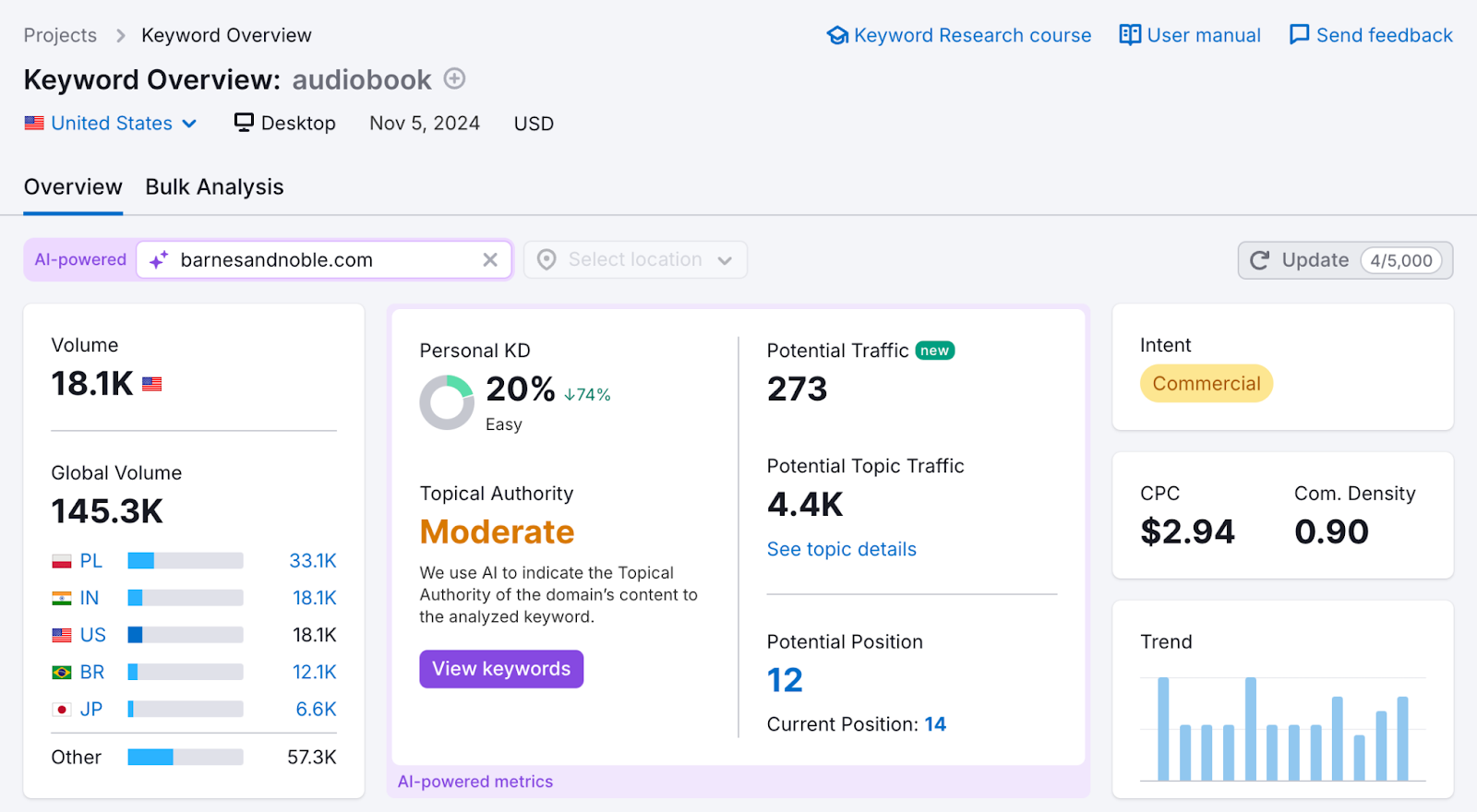
Image credit: Semrush Blog
Why These Features Matter in 2026
Google AI Overviews appeared for up to 25% of queries mid-2025 before stabilizing around 15-16%. Visibility here often reduces clicks to sites but boosts brand authority. Semrush’s tools help bridge this by quantifying AI Share of Voice—e.g., Semrush itself tripled its own AI visibility in one month using these features.
Pros
- Unified view of traditional + AI search.
- Actionable, data-backed recommendations.
- Scalable for freelancers to enterprises.
Cons
- Higher plans needed for full AI prompt tracking.
- Some features (like forecasting) limited to Enterprise.
Tutorials for Hands-On Learning
For visual walkthroughs, check these recent YouTube videos:
“Semrush Tutorial for AI SEO in 2025 (Beginner Friendly)” – Covers boosting visibility in AI and traditional search:
“How To Use Semrush AI SEO Toolkit in 2025 (Tutorial & Review)” – In-depth on the AI Visibility Toolkit:
“Semrush Tutorial – 2025 | Master Semrush AI SEO Tools”:
This overview is based on the latest 2025 data from Semrush’s official releases and verified reviews. Start with a trial to test Copilot and basic AI tools— they’re game-changers for adapting to AI-driven search. If your focus is purely content, explore the free AI text generator first at semrush.com/free-tools/ai-text-generator/.
Which Semrush plan is best for beginners or solo bloggers?
For beginners, the Semrush Pro plan is the best choice. It provides all essential SEO tools like keyword research, site audits, backlink analysis, and competitor research at a lower cost, making it ideal for bloggers and small website owners.
Which Semrush plan should I buy for an SEO agency?
SEO agencies usually benefit most from the Semrush Guru or Business plan. Guru works well for small agencies, while Business is better for larger teams needing higher limits, white-label reports, API access, and multiple user seats.
Does Semrush offer a free trial before buying a plan?
Yes, Semrush typically offers a 7-day free trial on paid plans. The trial allows you to test core features, but usage limits still apply, so it’s best to plan your testing period carefully.
Can I upgrade or downgrade my Semrush plan later?
Yes, you can upgrade or downgrade your Semrush plan anytime from your account dashboard. Upgrading takes effect immediately, while downgrades usually apply at the end of the current billing cycle.
Is the Semrush Business plan worth the price?
The Semrush Business plan is worth it only if you need high limits, API access, and large-scale data analysis. For most bloggers and small businesses, Pro or Guru offers better value without the higher cost.
What are the main limitations of the Semrush Pro plan?
The Pro plan has lower limits on projects, tracked keywords, and reports and does not include historical data or content marketing tools. It’s powerful for basic SEO but may feel restrictive as your business grows.