


Spocket suits global variety and branding; Sellvia wins on fast US shipping.
Choosing between Spocket vs Sellvia can shape your dropshipping path. I have run stores on both. I know what breaks, what scales, and what brings profit. In this guide, I break down Spocket vs Sellvia with clear facts, real tests, and simple steps you can use today. Keep reading to find your best fit.
What Are Spocket and Sellvia?
Spocket is a dropshipping app with many US and EU suppliers. It helps you import products, sync stock, and fulfill orders with a few clicks. The big draw is curated suppliers and branded invoicing.
Sellvia is a US-based supplier and fulfillment service. It holds stock in a US warehouse and ships fast within the country. The big draw is speed, ready-to-use product pages, and ad assets.
Spocket vs Sellvia looks close on paper. In practice, they serve different goals. One favors global reach and brand control. The other favors speed and simple ops for the US market.

Pricing and Plans
Both offer paid plans and trials. Costs change over time. Always check their sites before you start.
- Spocket
- Plans start in the mid-range for ecommerce apps. A free trial is common.
- You pay a monthly fee. You also pay product cost and shipping per order.
- Add-ons can raise costs. Think: review apps, currency apps, and bundles.
- Best for stores that need a broad catalog and better branding.
- Sellvia
- The base plan is also in a friendly range. A trial or promo often applies.
- You pay a monthly fee and product costs. US shipping is simple and fast.
- They sell custom store packages. These can include setup and niche picks.
- Best for US-first stores that want quick wins and quick delivery.
For a lean store, plan a basic stack. Expect the platform fee, a theme, one email tool, and one review tool. Keep your monthly app load tight. That protects your margin in both Spocket vs Sellvia setups.
Product Catalog and Sourcing Quality
Spocket focuses on curated suppliers. Many are in the US and EU. That can mean better quality and shorter routes than Asia-based dropship sources. The catalog is wide: home goods, beauty, fashion, pet, and more.
Sellvia runs a US warehouse with ready stock. The catalog is smaller than Spocket. It focuses on items that ship well and sell fast. Each product comes with descriptions, images, and ad creatives.
Quality control is tighter when stock is in-house. That is a Sellvia edge. Variety and niche depth are stronger with Spocket. That is a Spocket edge. Spocket vs Sellvia comes down to which edge you need more.
Shipping Speed, Reliability, and Returns
Speed sells. It also cuts support tickets.
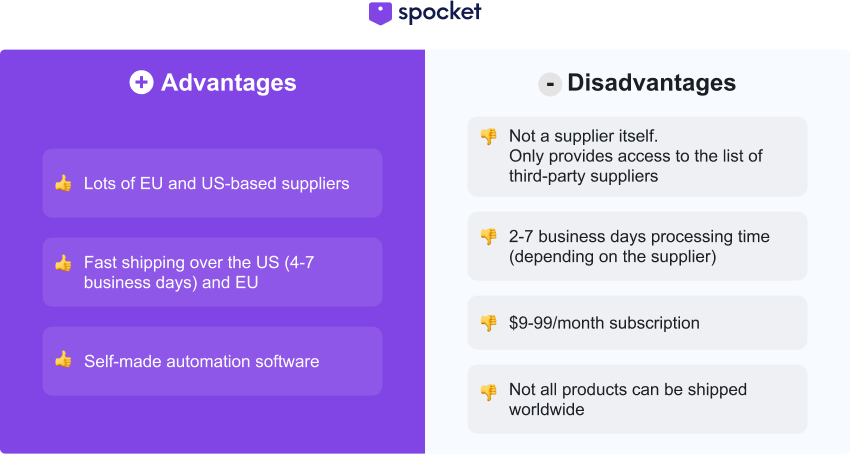
- Spocket
- Shipping times vary by supplier and route.
- US to US can be fast. EU to EU can be fast. Cross-border can take longer.
- Tracking is built in. Returns depend on each supplier’s rules.
- Sellvia
- Ships from the US for US orders. Many orders arrive in 1–3 business days.
- Uniform labels and easy tracking help reduce buyer worry.
- Returns go back to the US warehouse under clear terms.
If your buyers are in the US and you run ads, fast shipping will lift your ROAS. In that case, Spocket vs Sellvia favors Sellvia. If you sell in many regions, Spocket wins on reach.

Branding, Packaging, and Customer Experience
Brand trust lifts your AOV and repeat rate.
- Spocket
- Branded invoicing is a nice touch. Some suppliers offer custom packaging.
- You can order samples to check quality before you scale.
- Product titles and images are decent but still need edits to fit your brand.
- Sellvia
- You get ready product pages and marketing kits. That speeds launch.
- Packaging is standard. Custom work may need volume or special terms.
- Pages are built to convert. Tweak copy to match your voice.
For brand-first stores, Spocket vs Sellvia leans to Spocket. For speed-to-market and smooth ops, Sellvia is strong.

Integrations and Automation
Time saved is margin earned.
- Spocket
- Integrates well with Shopify, WooCommerce, and Wix.
- Auto order, tracking sync, price rules, and inventory updates are built in.
- Useful tools: global pricing rules and one-click import.
- Sellvia
- Integrates with Shopify and WooCommerce. A WordPress plugin is available.
- You can order with a click. Tracking sync is simple and fast.
- Done-for-you store options can remove setup work.
Both tools cover the core. Spocket gives more catalog control. Sellvia gives faster flow for US orders. In Spocket vs Sellvia, pick the stack that fits your channel and pace.

Profit Margins and Fees
Margin is a system, not a guess. Use a simple math frame.
Profit = Selling Price − Product Cost − Shipping − App Fees − Ads − Refunds
Example 1: Home decor item
- Spocket item cost: 18
- Shipping: 6
- Selling price: 49
- App share per sale: 1
- Ads per sale: 10
- Profit: 49 − 18 − 6 − 1 − 10 = 14
Example 2: Beauty tool
- Sellvia item cost: 12
- Shipping: 0–6 in the US (often low)
- Selling price: 34
- App share per sale: 1
- Ads per sale: 8
- Profit: 34 − 12 − 4 − 1 − 8 = 9
Your numbers will vary. Test price points. Track blended CAC. Factor refunds and chargebacks. In Spocket vs Sellvia, margin depends on offer, ad spend, and shipping plan more than on the platform fee.
Customer Support, Trust, and Risk
Both offer live support. The gap shows when orders go off script.
- Spocket
- Support helps, but each supplier has its own rules.
- Disputes, stock outs, and returns vary by supplier.
- Vet suppliers with sample orders. Read their policies before you list.
- Sellvia
- One warehouse. One team. One set of rules.
- That makes refunds and reships more clear.
- Less back-and-forth when issues hit.
For stable support, a single source helps. That gives Sellvia an edge for US stores. For broader catalogs, Spocket is still great. In Spocket vs Sellvia, the risk model is the key point.

Who Should Choose Which? Clear Use Cases
Pick Spocket if:
- You sell in the US and EU and want supplier variety.
- You want branded invoicing and curated products.
- You plan to build a brand with a wide catalog.
Pick Sellvia if:
- Your buyers are in the US and want fast delivery.
- You want ready pages, ad creatives, and a quick setup.
- You prefer one supplier to cut support load.
If your plan is hybrid, test both. Run US winners on Sellvia for speed. Keep niche and EU picks on Spocket. Spocket vs Sellvia can be a both-and choice.
Setup Steps and Migration Tips
Start with Spocket
- Connect Shopify, WooCommerce, or Wix.
- Pick products. Order samples. Set price rules.
- Edit titles and images. Launch collections.
- Turn on tracking sync and auto-fulfillment.
Start with Sellvia
- Connect Shopify or WooCommerce.
- Pick items from the US catalog. Import with one click.
- Use their product pages and creatives. Tweak copy for your brand.
- Launch. Watch delivery times and reviews.
Migrate or add-on
- Keep SKUs and URLs stable to save SEO.
- Map old to new products if sources change.
- Update shipping times on product pages and in flows.
- Phase in new products with small ad tests.
Lessons From My Own Stores
I launched a home niche store on Spocket. EU orders were smooth. US orders were fine but slower than I wanted. Branded invoices helped trust. We hit repeat buys faster than with generic sources.
I later tested a gadget offer on Sellvia for the US. Ads worked better with 2-day delivery. Support tickets dropped. Profit per order rose even with a similar product cost.
Key lessons for Spocket vs Sellvia:
- Speed lifts ad results. Reach lifts catalog depth.
- Sample orders save you later pain.
- Keep your app stack light. Protect your margin.
- Document every supplier rule in a short SOP.
Pros and Cons at a Glance
Spocket pros
- Wide US/EU catalog and curated suppliers
- Branded invoicing and strong automation
- Good for multi-region stores
Spocket cons
- Shipping times vary by supplier and route
- Some items have thin margins after shipping
- Supplier policies can differ a lot
Sellvia pros
- Fast US shipping from a single warehouse
- Ready product pages and ad creatives
- Clear returns and tracking
Sellvia cons
- Smaller catalog and US focus
- Less control over branding by default
- Global shipping is not the main play
Final Verdict on Spocket vs Sellvia
If your growth depends on fast US delivery and simple ops, pick Sellvia. If your plan needs variety, EU reach, and brand touches, pick Spocket. Both can win. It depends on your buyers and your goals.
My take: start where your traffic lives. US paid ads and TikTok? Sellvia first. Mixed markets or brand plays? Spocket first. You can blend both and route products by region.
Run a two-week test on each. Track CAC, delivery time, tickets, and margin. Let data choose the winner in your Spocket vs Sellvia setup.
Frequently Asked Questions of Spocket vs Sellvia
Is Spocket better than Sellvia for beginners?
Both are beginner friendly. Sellvia is faster to launch for US buyers. Spocket is better if you need more product choice.
Which has faster shipping, Spocket or Sellvia?
Sellvia ships faster in the US since it holds stock in a US warehouse. Spocket speed depends on each supplier and route.
Can I use both Spocket and Sellvia in one store?
Yes, many stores do that. Use Sellvia for US bestsellers and Spocket for EU items or niche lines.
How do margins compare between Spocket vs Sellvia?
Margins depend on product and ads. Sellvia saves money with fast shipping and fewer refunds. Spocket can win with higher price points and brand value.
Do they integrate with Shopify and WooCommerce?
Yes, both integrate with Shopify and WooCommerce. Spocket also supports Wix, while Sellvia offers a WordPress plugin route.
Can I add custom branding with either platform?
Spocket supports branded invoicing and some custom packaging by supplier. Sellvia packaging is standard, though you can brand pages and assets.
What about returns and refunds?
Sellvia handles returns in its US warehouse with clear rules. Spocket returns vary by supplier, so read each policy before you list.
Conclusion
Spocket vs Sellvia is not a one-size call. It is a match of speed, reach, and brand intent. Map your buyers and your ad plan first. Then choose the platform that removes the biggest risk.
Take action today. Test three products on each platform for two weeks. Track delivery, support load, and net profit per order. Keep the winner, cut the rest, and grow with focus. Want more playbooks? Subscribe or drop a comment with your niche.