
Navigating the Latest SEO Updates: How Geo-Location Impacts SEO
In 2026, geo-location has evolved into one of the most dominant and dynamic elements of SEO. Google no longer treats location as a simple add-on filter—it’s deeply integrated into AI-personalized search results, hyperlocal relevance signals, behavioral intent matching, and entity-based trust evaluation. The February 2026 Discover Core Update, combined with ongoing refinements to Google Maps (now powered more heavily by Gemini), landmark-based navigation, neighborhood-level personalization, and AI Overviews, means that proximity, regional authenticity, and granular local signals now heavily dictate visibility across traditional SERPs, Local Pack/Map results, Discover feeds, and generative AI responses.
This in-depth guide breaks down the current state of geo-location’s role in SEO, drawing from Google’s official documentation, 2026 industry reports (BrightLocal Local Search Ranking Factors, Whitespark surveys, Search Engine Land analyses), and expert observations. Whether you’re optimizing a single-location business, multi-location brand, or service-area company in the United States or globally, mastering these geo-driven shifts is essential to maintaining or improving rankings.
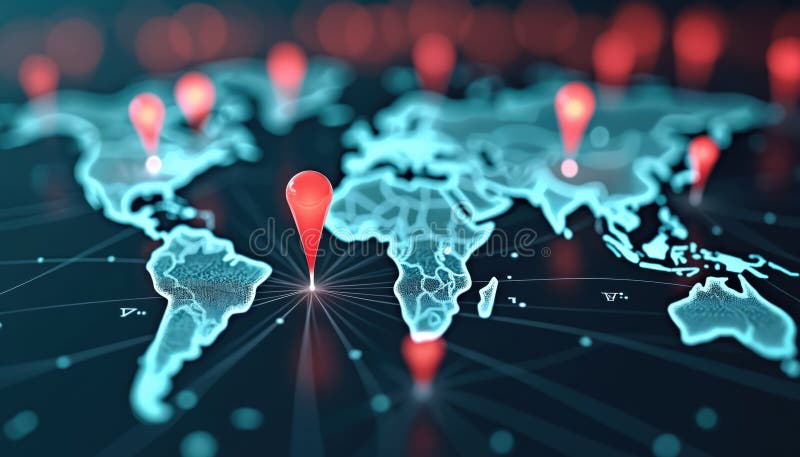
679 Digital Map Pinpoint Stock Photos – Free & Royalty-Free Stock Photos from Dreamstime
Image Credit: Royalty-free from Dreamstime – Digital world map with glowing pinpoint markers and connection lines representing global geo-location and local search networks.
The Evolution of Geo-Location in Google’s Algorithm (2026 Context)
Google’s foundational local ranking pillars—Relevance, Distance, and Prominence—remain unchanged in name, but their implementation has been dramatically enhanced by AI, real-time signals, and personalization.
- Relevance now requires deep geographic context: neighborhood names, local landmarks, regional events, cultural references, and user-intent alignment rather than generic city-level targeting.
- Distance/Proximity is no longer static. It dynamically factors in real-time user location (device GPS, IP, Wi-Fi), “open now” status, traffic conditions, and even landmark-based routing (e.g., “near the old theater” via Gemini Maps).
- Prominence increasingly relies on AI-evaluated trust: review velocity and sentiment, entity consistency across platforms, behavioral engagement (clicks, calls, direction requests), and multi-source local mentions.
Major 2026 developments driving these changes include:
- February 2026 Discover Core Update — Significantly boosted visibility for locally rooted content and publishers in Discover feeds, prioritizing region-specific relevance.
- Gemini integration in Google Maps — Enables conversational navigation (“turn after the famous coffee shop”) and AI Lens Q&A, making precise business placement, visual content, and landmark proximity more important than ever.
- Hyperlocal dominance — Broad city rankings are declining; neighborhood- and suburb-level results now prevail in urban areas.
- Generative Engine Optimization (GEO) influence — AI Overviews and tools like ChatGPT/Perplexity increasingly cite local businesses based on GBP completeness, review signals, and citation strength.
These updates collectively shift SEO from broad geo-targeting to proving authentic, granular local presence in an increasingly personalized and AI-mediated search ecosystem.

Image Credit: SiteGuru
How Geo-Location Directly Impacts Ranking Factors in 2026
Proximity & Real-Time Location Signals
Google personalizes results using precise user location data. In 2026, proximity combines with dynamic signals like “open now” status, current traffic, and user movement patterns.
Strategic implications:
- Define tight, realistic service areas in Google Business Profile (GBP).
- Use geotagged photos and mention nearby landmarks in GBP descriptions/posts.
- Monitor “open now” performance—businesses open during peak search times gain advantage.
Hyperlocal & Neighborhood-Level Targeting
Broad city optimization is losing effectiveness. Searches for the same query in different neighborhoods yield varied results due to demographic, cultural, and ecosystem differences.
Strategic implications:
- Build neighborhood-specific landing pages with local references (schools, parks, events, slang).
- Avoid generic “serving [City]” phrasing—embed authentic neighborhood details.
- Optimize for conversational/voice queries (“coffee shop near me open late in [Neighborhood]”).
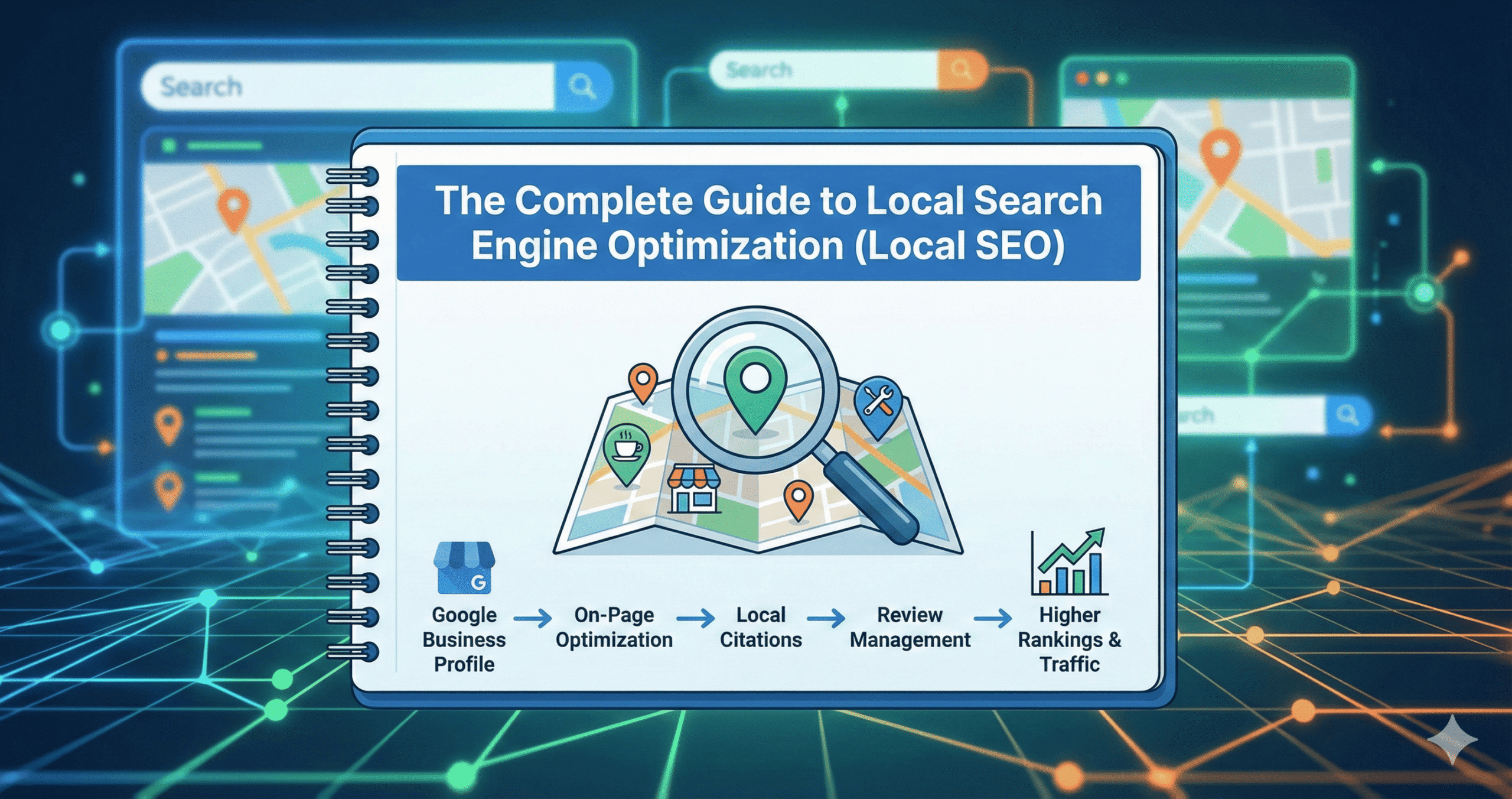
Image Credit: Cloudex Marketing
Entity Authenticity & Geographic Consistency
Google increasingly verifies “real local presence” through NAP consistency, schema, citations, and entity connections (Wikipedia, local directories, news mentions).
Strategic implications:
- Achieve 100% NAP consistency across major aggregators (Yelp, Apple Maps, Bing Places).
- Implement LocalBusiness schema with precise geo coordinates and service areas.
- Earn local citations with geographic context (chamber memberships, regional blogs).
Behavioral & Engagement Signals
Clicks, calls, direction requests, photo uploads, messaging, and review interactions now carry significant weight.
Strategic implications:
- Prompt location-specific reviews (“What did you love about our [Neighborhood] location?”).
- Post weekly GBP updates (events, offers) to spark actions.
- Enable messaging, bookings, and Q&A features.
AI Overviews & Generative Search (GEO)
AI systems prioritize trustworthy local sources based on reviews, GBP completeness, and citation depth.
Strategic implications:
- Create detailed, locally anchored content optimized for direct answers.
- Build review volume/velocity and multi-platform presence for citation likelihood.
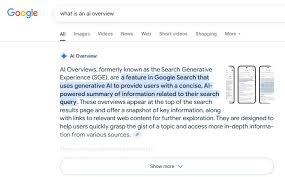
Image Credit: Temerity Digital
Essential Geo-Location SEO Strategies for 2026
Master Google Business Profile (GBP) Optimization
GBP is the cornerstone of local visibility in 2026.
- Claim/verify every location.
- Choose precise primary/secondary categories.
- Set accurate service areas (avoid overly broad radii).
- Upload high-quality, geotagged photos weekly.
- Post regularly (offers, events, answers to frequent questions).
- Respond to every review promptly and professionally.
![How To Use Google Business Profile For Local SEO: Complete Guide To GBP [ex- Google My Business]](https://zenbrief.com/wp-content/uploads/2022/07/How-To-Use-Google-Business-Profile-For-Local-SEO_-Complete-Guide-to-GBP-ex-GMB.png)
Image Credit: ZenBrief
Develop Hyperlocal Content Strategy
- Prioritize neighborhood pages over generic city pages.
- Incorporate local landmarks, events, history, and community references.
- Use structured data (LocalBusiness, FAQ, Review) with geo coordinates.
Strengthen Citations & Entity Building
- Audit and correct NAP across 50+ directories (use tools like BrightLocal or Moz Local).
- Secure mentions from local news, blogs, chambers of commerce.
- Build relationships with regional influencers/partners for natural links.
Maximize Reviews & Engagement
- Target 10+ reviews per location (key trust threshold).
- Encourage photo/video reviews with location tags.
- Monitor sentiment and respond thoughtfully to all feedback.
Prepare for AI & Voice Search Dominance
- Write conversational content answering spoken queries.
- Implement schema for direct AI answers.
- Optimize for zero-click visibility in AI Overviews and Maps snippets.
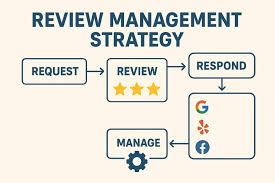
Image Credit: SEO Digital Sight
Common Challenges & Solutions in 2026
- Post-update volatility — February 2026 changes hit broad sites; counter with deeper local signals.
- High metro competition — Differentiate via hyperlocal content and engagement.
- AI citation difficulty — Focus on review velocity and multi-platform authority.
Measuring Geo-Location SEO Success & Tools
Key metrics:
- Local Pack / Map visibility (track with BrightLocal, Local Falcon).
- GBP insights (calls, directions, photo views).
- AI visibility (manual testing in AI Overviews, ChatGPT, Perplexity).
- Organic traffic from local queries (Google Search Console geo filters).
Recommended tools:
- Google Search Console & GBP dashboard
- BrightLocal / Whitespark for citation & rank tracking
- Semrush Local / Moz Local for audits
Conclusion: Geo-Location Is the Core Competitive Advantage in 2026 SEO
In 2026, geo-location has transformed from a supporting factor into the foundation of personalized, AI-augmented search. Broad city targeting is fading; neighborhood authenticity, real-time proximity, behavioral engagement, and entity trust now determine dominance in Maps, Local Pack, AI Overviews, and beyond.
Businesses that treat geo-location as a strategic priority—optimizing GBP rigorously, building hyperlocal authority, driving authentic engagement, and preparing for AI citation—will capture the most qualified local traffic. Audit your profiles, deepen neighborhood signals, and adapt now: the future of SEO is hyperlocal and deeply geographic.