

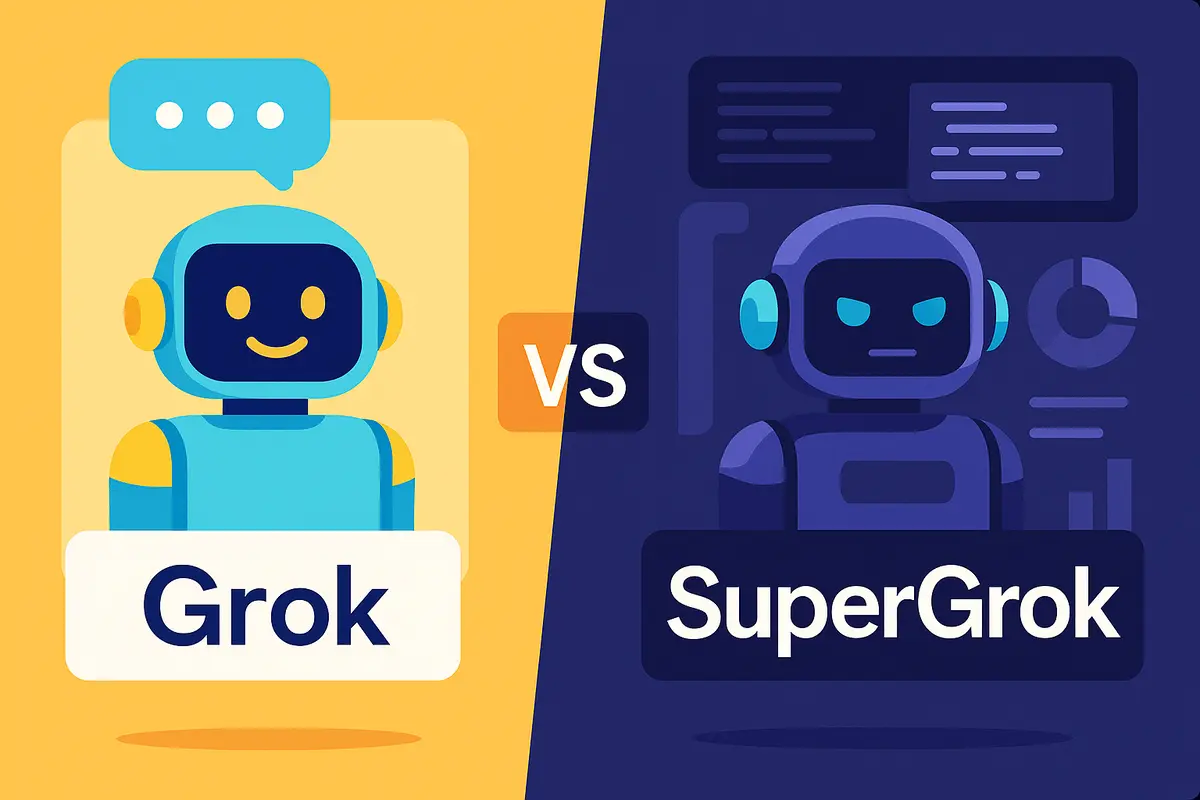
Grok suits fast consumer AI; Supergrok favors control, privacy, and custom setups.
If you want a clear, expert view on Grok Vs Supergrok, you are in the right place. I have built and tested both Grok and Supergrok-style stacks in real teams. In this guide, I explain what each does well, where each falls short, and how to choose the best fit for your work. By the end, you will know exactly when to pick Grok Vs Supergrok for speed, cost, and results.
What Is Grok?
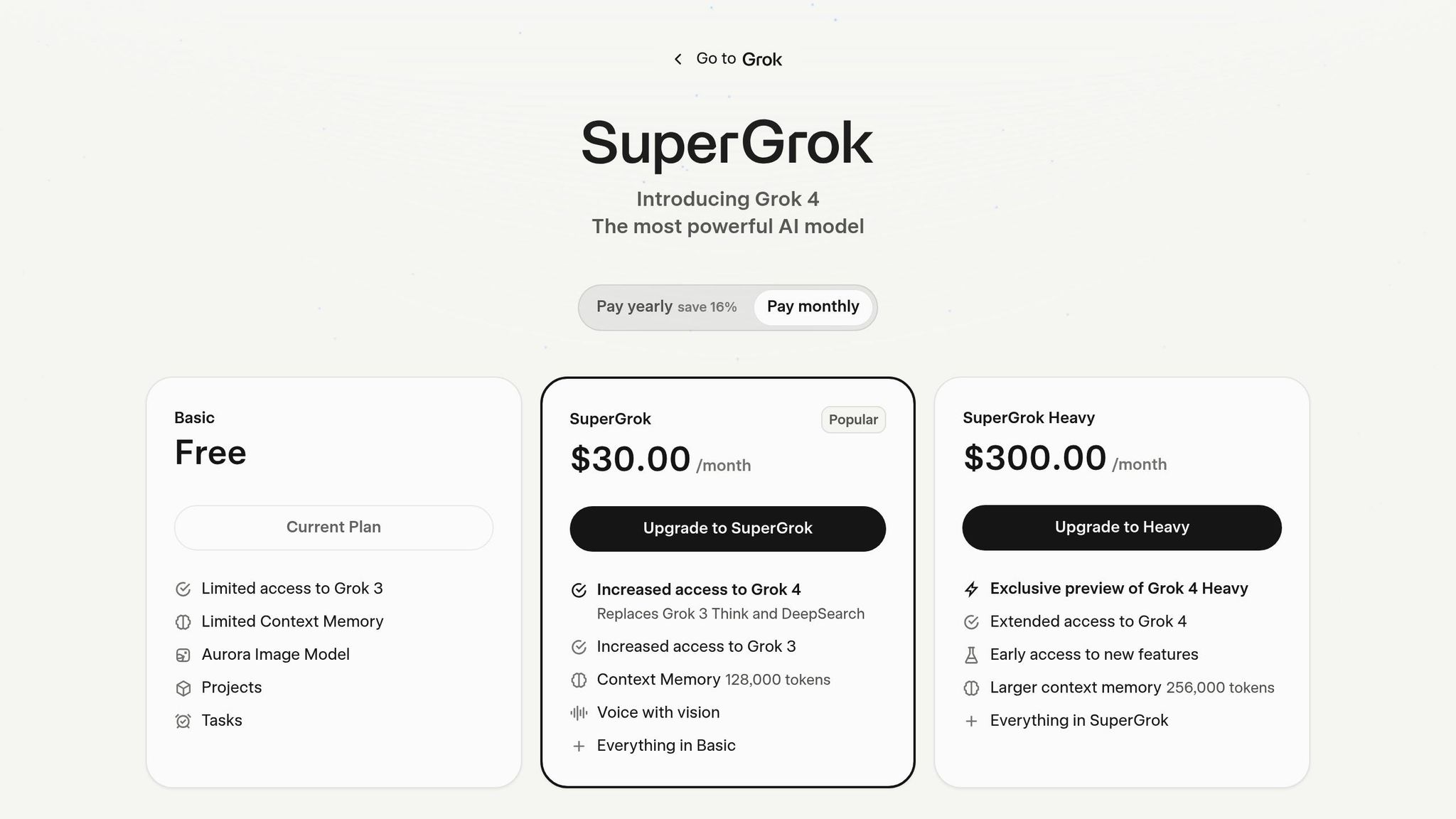
Grok is a hosted AI assistant built for fast answers and broad knowledge. It shines for general chat, coding help, quick research, and daily tasks. It is simple to use and needs no setup.
Grok often includes web access, image features, and tool use for common jobs. You get updates as the model improves. You also get guardrails, rate limits, and secure hosting by default.
Teams who want speed with low overhead love it. You pay for access and use. You do not run servers. You do not manage models. You focus on outcomes.

What Is Supergrok?
Supergrok is not a single official product. It is a common label for advanced, Grok-like systems with added control. Think of Supergrok as a pattern, not a brand. It can be a private, enterprise-grade stack that matches or extends Grok features.
A Supergrok stack can use open-source or licensed models. It can live in your cloud or on your hardware. It can add private data, tool use, agents, and strict governance. It is built for teams that need deep control, custom flows, and strong privacy.
If Grok is plug-and-play, Supergrok is build-and-own. It takes work to set up. It also gives you more control, better data privacy, and custom cost options at scale.

Grok Vs Supergrok: Key Differences That Matter
Here is how Grok Vs Supergrok usually compare in real projects.
- Ownership and control. Grok is hosted and managed for you. Supergrok is built and governed by you.
- Data privacy. Grok keeps your data in its platform under set rules. Supergrok lets you keep data in your VPC and set custom retention.
- Customization. Grok is easy but less flexible. Supergrok supports custom prompts, tools, RAG, agents, and policies.
- Latency and speed. Grok feels fast for most tasks. Supergrok can be faster on your data if you tune hardware and caching.
- Cost model. Grok is pay-as-you-go. Supergrok cost depends on infra, optimization, and use. It can be cheaper at scale.
- Compliance. Grok offers standard compliance from the provider. Supergrok can be tailored to strict rules like HIPAA, FedRAMP, or regional needs.
- Reliability. Grok gives you SLA from the provider. Supergrok needs your SRE and MLOps.
- Upgrades. Grok improves without your work. Supergrok needs planned updates and testing.
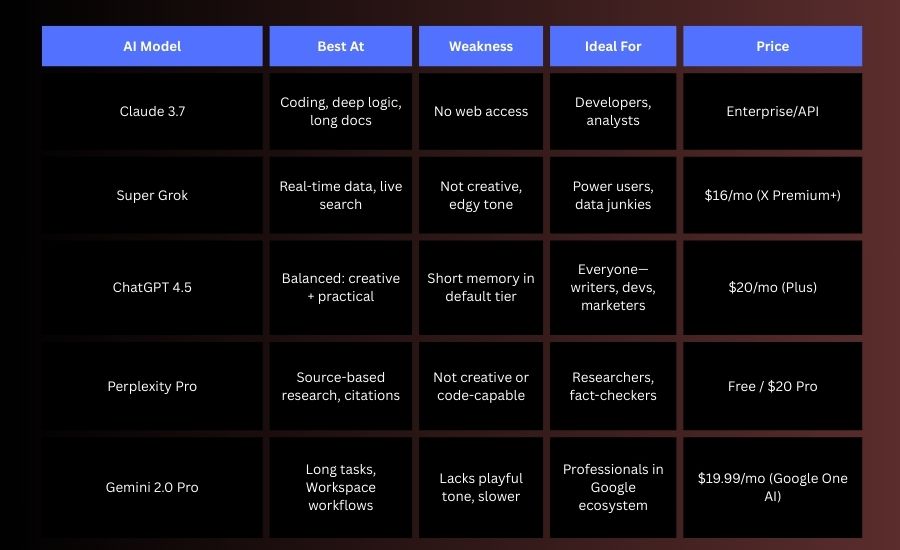
For search intent, the core question in Grok Vs Supergrok is control vs convenience. If you need simple and fast, choose Grok. If you need privacy, custom flows, and deep control, choose Supergrok.
When To Choose Grok Vs Supergrok
Use these simple signals based on my deployments.
- Choose Grok if you want quick wins. You need a smart assistant for product, sales, support, or engineering today. You do not want to manage infra.
- Choose Supergrok if you have sensitive data. You need private hosting, custom tools, and control over logs and prompts. You need strict governance.
- Pick Grok for pilots with non-sensitive data. It is the fastest way to learn.
- Pick Supergrok for production in regulated areas. It reduces risk and gives you audit trails you control.
- For hybrid use, start with Grok for general work. Use Supergrok for workflows that handle secrets or IP.
This simple split has worked well for mixed teams that ask about Grok Vs Supergrok every quarter.
Performance, Benchmarks, and Model Quality
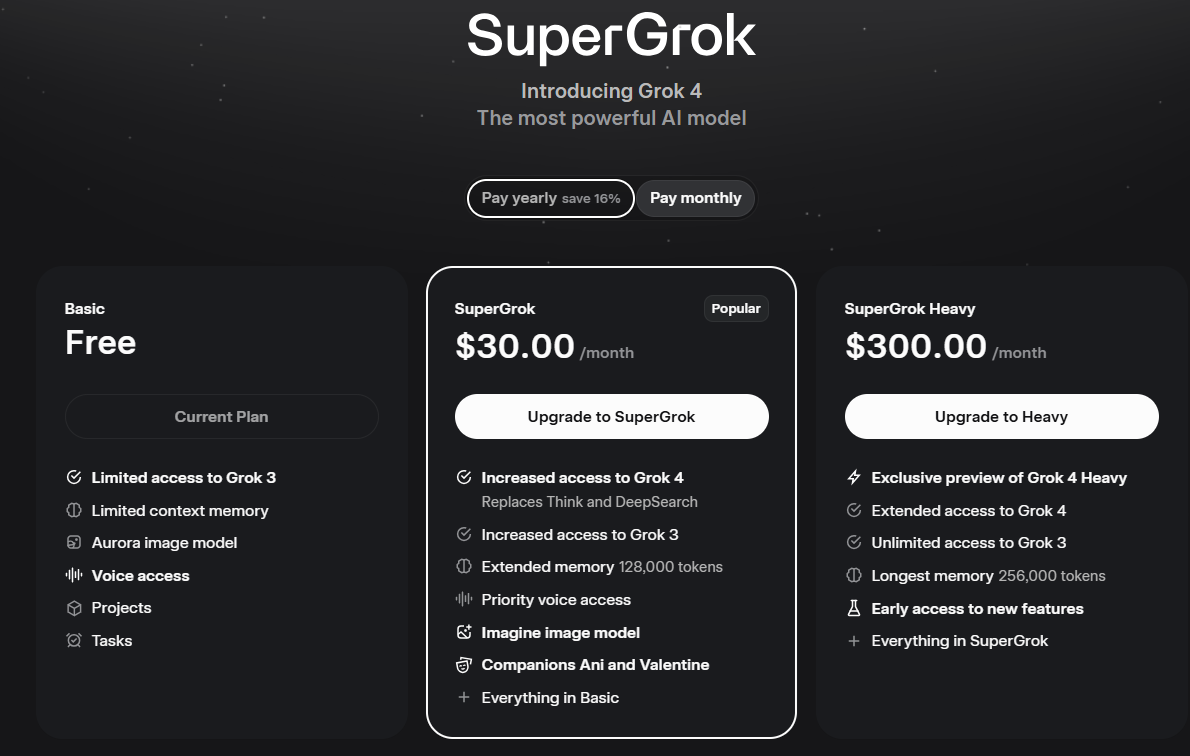
Benchmark charts can mislead if the test set does not match your work. The right way to compare Grok Vs Supergrok is to test on your real tasks. Use your prompts, your data, and your KPIs.
To run a fair test, do this:
- Build a small eval set with 50 to 200 real questions.
- Include coding, writing, search, math, and domain tasks.
- Rate answers on truth, clarity, and action value.
- Track latency, cost per task, and error rate.
- Use blind review to remove bias.
Independent tests often show that hosted models like Grok do well on broad tasks. A tuned Supergrok stack can beat them on your private docs with a strong RAG setup. The winner in Grok Vs Supergrok depends on your goals, not a single score.

Pricing and Total Cost of Ownership
Price is not only per-token cost. TCO includes tools, people, and risk. For Grok Vs Supergrok, think in layers.
- Grok costs. Subscription or usage fees, plus time to integrate. Low ops cost. Vendor manages scaling and updates.
- Supergrok costs. Cloud or hardware, vector DB, orchestration, logging, and monitoring. You also need MLOps time and security reviews. At high volume, it can be cheaper per task.
I tell clients to model three cases for Grok Vs Supergrok:
- Low volume. Grok wins on cost and speed.
- Medium volume with light privacy needs. It is close. Choose based on feature fit.
- High volume and strict privacy. Supergrok often wins on TCO, but only with a well-tuned stack.
Security, Compliance, and Risk
Security is where Grok Vs Supergrok can diverge fast. Hosted AI gives you platform security and audits. That is great for many teams. But it may not meet hard rules in finance, health, or public sector.
A Supergrok setup can enforce:
- Data stays in region. No cross-border transfer.
- No training on your data. Hard blocks and retention limits.
- Private network paths and customer-managed keys.
- Full audit logs and red-team reviews.
- Custom PII scrubbing and policy checks before and after generation.
If you face audits, map each control to a specific measure. Do not assume. In my reviews, clear policy and logging decide the winner more than model quality.
Implementation Checklist: How To Pilot Both
A clean head-to-head pilot makes Grok Vs Supergrok easy to judge. Use this 10-step plan.
- Define 3 target workflows with clear goals and owners.
- Create a shared prompt library for both systems.
- Build a 100-question eval set from real user cases.
- Add a vector index for your top 500 documents.
- Set red lines for data and access before any test.
- Measure speed, cost, accuracy, and user joy.
- Collect 20 real user ratings per workflow.
- Fix the top 3 failure modes and re-test.
- Run a security review with your privacy team.
- Decide a split: where Grok fits, where Supergrok fits.
This plan keeps the Grok Vs Supergrok choice honest and data driven.

Lessons From The Field: What Worked, What Did Not
In one startup, Grok helped support agents cut reply time by half in one week. No infra work. That fast win built trust. Then we moved sensitive refunds to a Supergrok flow with strict logs and PII rules.
In a bank pilot, we tried Grok for code help and Supergrok for policy Q&A. Devs loved Grok’s speed. Compliance loved Supergrok’s control. The best result used both.
Mistakes to avoid in Grok Vs Supergrok:
- Do not tune prompts for only one system. Keep them aligned.
- Do not skip evals on your data. Benchmarks are not your workload.
- Do not push PII into any system without a signed policy.
- Do not judge only by model name. Judge by task, risk, and cost per task.
Advanced Features: Agents, RAG, and Tooling
Modern work needs more than chat. It needs agents that plan steps, use tools, and cite sources. Here is how Grok Vs Supergrok compare.
- RAG. Grok often has built-in search or web tools. Supergrok lets you build deep RAG with custom chunking, rerankers, and domain rules.
- Agents. Grok can chain simple tasks. Supergrok can run multi-step agents with planning, retries, and guardrails you choose.
- Tools. Grok supports curated tools with limits. Supergrok can call your APIs, databases, and workflows with fine access control.
A tuned Supergrok stack can beat Grok on hard, private tasks with clear sources. But it takes good design. Keep it simple first. Then add complexity only if the gain is clear.
Roadmap and Future-Proofing
Models improve every quarter. Your choice in Grok Vs Supergrok should handle change. Plan for swap, not lock-in.
Do these to stay future ready:
- Use an API layer that can switch models.
- Keep prompts in version control.
- Store evals and logs to measure drift.
- Train people, not just models. Good prompts age well.
- Review cost and risk every quarter.
This keeps you flexible if Grok gains a key feature or your Supergrok stack needs an upgrade.
Frequently Asked Questions of Grok Vs Supergrok
Is Supergrok an official product?
No. Supergrok is a common label for an advanced, Grok-like setup. It usually means a private, customized AI stack that you run and control.
Which is cheaper, Grok or Supergrok?
At low volume, Grok is cheaper and faster to start. At high volume with strict privacy, a well-tuned Supergrok stack can lower cost per task.
Which is better for sensitive data?
Supergrok is better because you control hosting, access, and logs. You can keep data in your VPC and set strict retention.
Can I use both Grok and Supergrok together?
Yes. Many teams use Grok for general work and Supergrok for sensitive workflows. This split balances speed and risk.
How do I compare accuracy fairly?
Test on your real tasks with a shared eval set. Measure truth, clarity, cost, and latency with blind reviews.
Does Supergrok require a large engineering team?
You need some MLOps and security skills to run it well. Start small with a pilot and grow based on value.
Conclusion
Grok Vs Supergrok is a choice between convenience and control. Grok wins for speed, low setup, and broad tasks. Supergrok wins for privacy, custom flows, and scale economics when you need them.
Pick one to start, but plan for both. Run a focused pilot, measure results, and make a clear, data-driven call. If this helped, subscribe for more deep dives, or share your own Grok Vs Supergrok lessons in the comments.